
Converting a Nissan 240sx from automatic to manual offers enhanced driver engagement and control. This popular modification, costing $400-$500, involves careful parts selection and installation.
The swap requires ECU considerations, especially for 1995-1998 models, and potential transmission tunnel modifications due to size differences.
Overview of the Swap
The 240sx manual transmission swap fundamentally alters the driving experience, replacing the convenience of automatic operation with the direct control and responsiveness favored by enthusiasts. This conversion typically involves sourcing a compatible five-speed manual transmission, often from another 240sx or similar Nissan vehicle.
Crucially, the swap isn’t merely a mechanical exchange; it necessitates careful attention to the Electronic Control Unit (ECU). For 1995-1998 models, ECU compatibility is paramount, requiring either a matching year ECU or repinning a 95-96 unit for use in a 97-98 chassis. Beyond the core transmission, components like the pedal assembly, clutch kit, and driveshaft must be addressed, ensuring proper functionality and fitment.
Furthermore, some installations may require modifications to the transmission tunnel to accommodate the larger manual transmission, particularly when utilizing a T56. This overview highlights the key elements involved in transforming your 240sx into a driver-focused machine.
Benefits of a Manual Transmission
Switching to a manual transmission in your 240sx unlocks a more engaging and connected driving experience. Drivers gain precise control over gear selection, optimizing power delivery for spirited driving or efficient cruising. This direct control enhances responsiveness and allows for greater driver involvement, fostering a stronger connection with the vehicle.
Beyond the driving feel, a manual swap often provides performance benefits. Eliminating the torque converter losses inherent in an automatic transmission can result in improved acceleration and fuel economy. Furthermore, a manual transmission offers greater reliability and simpler maintenance compared to complex automatic systems.
For enthusiasts, the ability to fully control the vehicle’s powerband is a significant advantage, making the 240sx a more rewarding and enjoyable machine to drive.
Tools and Materials Required
Successfully completing a 240sx manual transmission swap demands a comprehensive toolkit. Essential tools include standard socket sets, wrenches, screwdrivers, and torque wrenches for precise tightening. Specialized tools like a transmission jack, clutch alignment tool, and potentially a flywheel holding tool are crucial.
Beyond hand tools, access to a floor jack, jack stands, and wheel chocks is vital for safe vehicle lifting. Materials needed encompass new transmission fluid, clutch fluid, and potentially lubricant for installation. Don’t forget penetrating oil to loosen stubborn bolts!
Safety gear, including gloves and eye protection, is paramount. Having a repair manual specific to the 240sx will also prove invaluable throughout the process;

Parts Acquisition
Sourcing the correct transmission, pedal assembly, and ECU are key. Compatibility varies by 240sx year; 95-96 ECUs can be re-pinned for 97-98 models.
A suitable clutch kit and driveshaft are also essential components for a successful swap.
Sourcing a Compatible Transmission
Finding the right manual transmission for your 240sx is crucial for a smooth swap. S13 transmissions can be used in a 1995 S14, but compatibility ends there for later S14 models. Specifically, 1996-1998 S14s require a transmission from a 1996-1998 240sx, or a re-pinned ECU from a 1995-1996 model to ensure proper functionality.
Consider the transmission’s features and how they align with your project goals. Fitment is paramount, as the manual transmission will need to physically integrate with the vehicle’s drivetrain. Thorough research and verifying compatibility before purchasing will save time and potential headaches during the installation process. Don’t forget to account for all necessary sensors included with the transmission.
ECU Considerations (95-98 Models)
For 1995-1998 240sx models undergoing a manual transmission swap, the Engine Control Unit (ECU) requires careful attention. A 1996 model necessitates an ECU sourced directly from another 1996 240sx. Similarly, 1997-1998 models demand an ECU from a 1997-1998 vehicle for seamless operation.
However, an alternative exists: a 1995-1996 ECU can be re-pinned to function correctly within a 1997-1998 240sx. This re-pinning process involves modifying the ECU’s wiring to match the later model’s specifications. Choosing the correct ECU, or successfully re-pinning one, is vital for avoiding operational issues post-swap.
Pedal Assembly and Master Cylinder
Successfully completing a 240sx manual transmission swap requires a complete pedal assembly sourced from a manual transmission-equipped vehicle. This assembly includes the clutch pedal, which is absent in automatic models. Installation involves securely mounting the assembly within the driver’s footwell, ensuring proper alignment and functionality.
Alongside the pedal assembly, a compatible master cylinder is crucial. This component translates pedal pressure into hydraulic force, actuating the clutch. Selecting a master cylinder designed for the 240sx’s hydraulic system guarantees optimal clutch engagement and smooth shifting. Proper bleeding of the system is essential after installation.
Clutch Kit Selection
Choosing the right clutch kit is paramount for a successful 240sx manual transmission swap, directly impacting drivability and longevity. Kits typically include the pressure plate, clutch disc, throw-out bearing, and pilot bearing. Consider your driving style and intended use – stock replacements suit daily driving, while upgraded kits offer increased clamping force for performance applications.
Pay attention to the clutch disc diameter and spline count to ensure compatibility with both the transmission and flywheel. Ceramic clutches provide aggressive engagement, ideal for racing, but can be harsh for street use. Organic clutches offer smoother engagement and better street manners.
Driveshaft and Related Components
After installing the manual transmission, addressing the driveshaft is crucial. The automatic and manual transmission outputs differ, necessitating a compatible driveshaft or a driveshaft loop. Inspect the existing driveshaft for wear and ensure it’s balanced to prevent vibrations. Depending on the transmission sourced, a custom driveshaft might be required, adding to the overall cost.
Also, verify the condition of the rear differential flange and u-joints. Replacing worn components ensures smooth power transfer. Securely connecting the driveshaft is vital; double-check all bolts and hardware for proper torque specifications. A properly fitted driveshaft guarantees optimal performance.

Removal of the Automatic Transmission
Begin by draining the automatic transmission fluid, then disconnect the driveshaft, center console, shifter, wiring, and cables. Finally, carefully remove the automatic transmission itself.
Draining the Automatic Transmission Fluid
Before initiating the 240sx manual transmission swap, completely draining the automatic transmission fluid is crucial. Locate the drain plug, typically on the bottom of the transmission pan. Position a suitable drain pan underneath to catch the fluid, as it will be hot and potentially messy.
Carefully remove the drain plug using the appropriate wrench, allowing the fluid to drain fully. Once drained, reinstall the plug, ensuring it’s tightened to the manufacturer’s specified torque. This step prevents leaks during the subsequent removal process. Remember to dispose of the used fluid responsibly at a designated recycling center, adhering to environmental regulations.
Proper draining ensures a cleaner and safer removal of the automatic transmission.
Disconnecting the Driveshaft
Following the fluid drain, disconnecting the driveshaft is the next essential step in the 240sx manual transmission swap. Support the driveshaft with a jack to prevent dropping and causing damage. Locate the bolts connecting the driveshaft to the rear differential and transmission.
Carefully remove these bolts, then gently slide the driveshaft back, away from the transmission. Be prepared for a small amount of residual fluid to drip. Once free, carefully lower the driveshaft using the jack and set it aside. Inspect the driveshaft for wear and consider replacing any damaged components during the swap.
Proper disconnection ensures safe removal and facilitates transmission access.
Removing the Center Console and Shifter Assembly
To proceed with the 240sx manual transmission swap, removing the center console and shifter assembly is crucial. Begin by removing the finisher plate surrounding the shifter. Next, carefully detach the center console, typically held in place by screws and clips.
Once the console is loose, disconnect any wiring harnesses connected to switches or accessories within the console. Gently lift the console, revealing the shifter assembly below. Disconnect the shift linkage from the automatic transmission.
Remove the shifter assembly itself, freeing up space for manual transmission installation and pedal assembly access.
Disconnecting Wiring and Cables
Before fully removing the automatic transmission, meticulously disconnect all associated wiring and cables. This includes the vehicle speed sensor (VSS) wire, the neutral safety switch connector, and any wiring connected to the transmission itself;
Carefully label each connector to ensure correct re-installation during the manual transmission setup. Disconnect the throttle cable and any other cables running near the transmission. Pay close attention to the kickdown cable, if equipped.
Proper disconnection prevents damage and simplifies the swap process, ensuring a smooth transition to the manual system.
Removing the Automatic Transmission
With all wiring, cables, and the driveshaft disconnected, the automatic transmission is ready for removal. Support the transmission with a transmission jack to prevent damage during lowering. Remove the bolts securing the transmission to the engine.
Carefully separate the transmission from the engine, ensuring it’s fully supported by the jack. Slowly lower the transmission, maneuvering it around any obstructions. Once clear, carefully roll the automatic transmission out from under the vehicle.
Inspect the flexplate for damage and set it aside, as it will be replaced with a flywheel for the manual setup.

Installation of the Manual Transmission
Begin by installing the clutch and flywheel, then carefully mount the manual transmission. Connect the driveshaft and install the pedal assembly for a smooth operation.
Ensure proper alignment and secure all components before proceeding.
Installing the Clutch and Flywheel
Before installing the manual transmission, meticulous preparation of the flywheel and clutch is crucial. Begin by thoroughly cleaning the flywheel surface to ensure optimal friction. Next, install the flywheel, tightening the bolts to the manufacturer’s specified torque in a star pattern – this prevents warping.
Then, carefully mount the clutch disc, ensuring it’s centered using a clutch alignment tool. This tool is essential for smooth transmission installation. Finally, install the pressure plate, again tightening the bolts in a star pattern to the correct torque. Double-check all fasteners for security. A properly installed clutch and flywheel are fundamental for a reliable manual transmission swap.
Mounting the Manual Transmission
With the clutch and flywheel securely installed, carefully lift the manual transmission into position. Align the input shaft with the clutch disc, gently rotating the transmission to facilitate engagement. Support the transmission with a transmission jack to manage its weight and ensure proper alignment.
Begin bolting the transmission to the engine, again using a star pattern to evenly distribute pressure. Ensure all bolts are properly seated and tightened to the manufacturer’s specifications. Double-check that the transmission is fully seated against the engine, and that all mounting points are secure. A stable and correctly mounted transmission is vital for a successful swap.
Connecting the Driveshaft
After mounting the manual transmission, reconnect the driveshaft. Inspect the driveshaft for any damage or wear, replacing components as needed. Carefully slide the driveshaft into the transmission’s output shaft, ensuring it’s fully seated. Secure the driveshaft with the appropriate bolts, tightening them to the specified torque.
Verify proper alignment between the driveshaft, transmission, and rear differential. Any misalignment can cause vibrations or premature wear. Reconnect the driveshaft to the rear differential flange, again using the correct hardware and torque specifications. A properly connected driveshaft is crucial for transferring power efficiently.
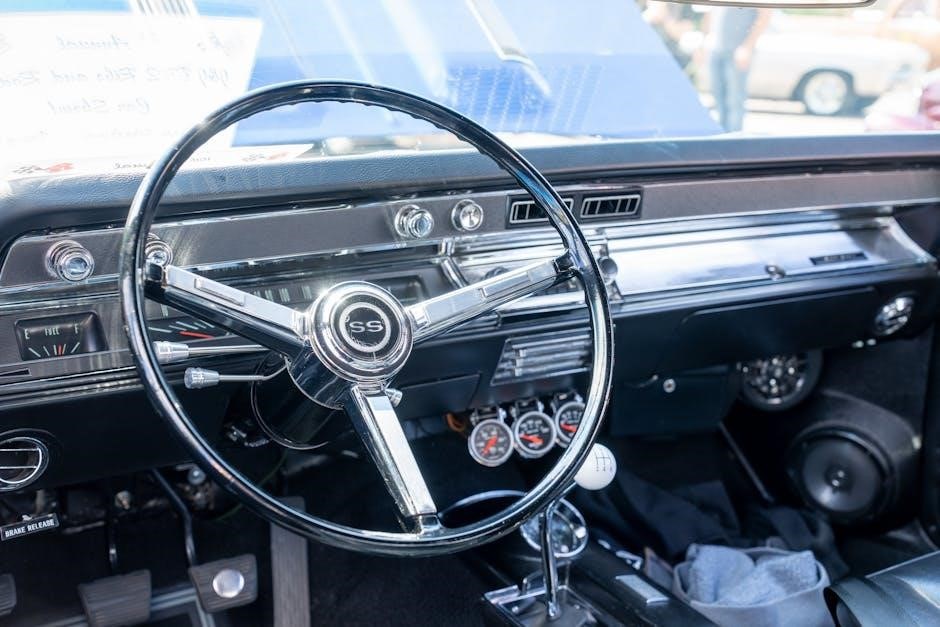
Installing the Pedal Assembly
The installation of the manual pedal assembly is a critical step. Begin by removing any remnants of the automatic brake pedal. Carefully position the manual pedal assembly, ensuring correct orientation and alignment within the driver’s footwell. Secure the assembly using the factory mounting points and hardware, tightening bolts to the specified torque.
Connect the clutch pedal to the master cylinder. Proper installation is vital for smooth clutch engagement. Double-check all connections and ensure free movement of the pedals. A correctly installed pedal assembly provides the necessary controls for operating a manual transmission.
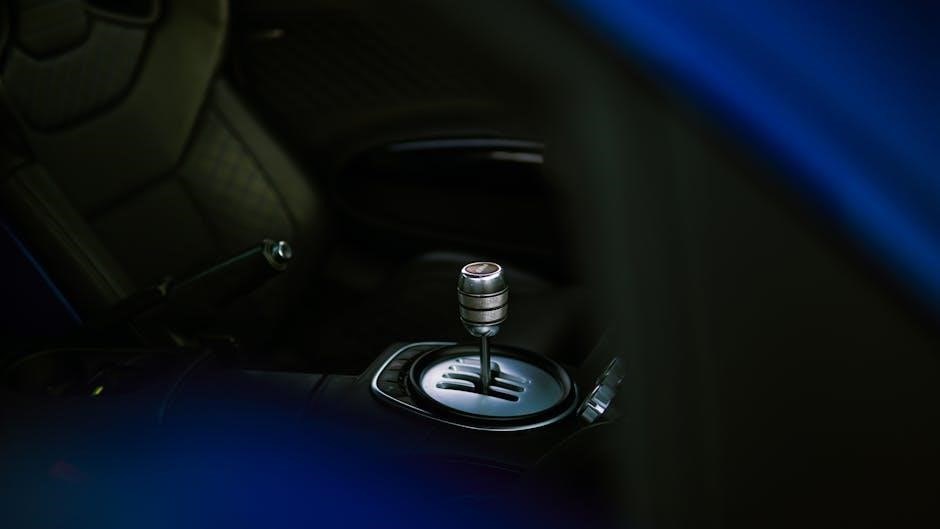
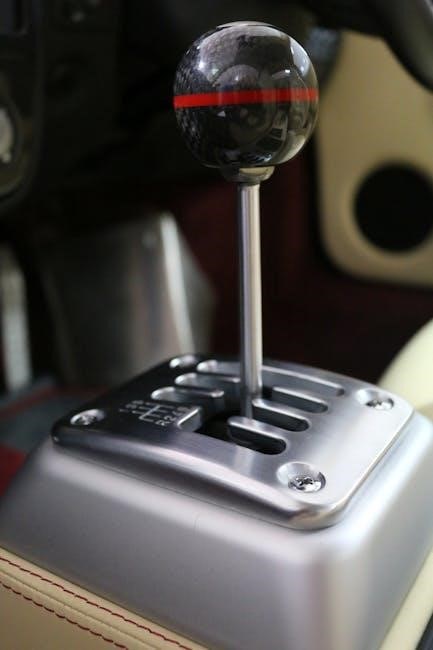
Connecting the Shifter Linkage
Proper shifter linkage connection is crucial for precise gear selection. Install the shifter base into the transmission tunnel, ensuring it’s securely mounted. Connect the shift rods to the transmission, verifying smooth and accurate movement through all gears. Adjust the linkage to eliminate any binding or looseness, achieving a crisp and defined shift feel.
Carefully route the linkage, avoiding contact with any exhaust or moving parts. Test the shifter’s operation, confirming each gear engages correctly. Fine-tune adjustments as needed to optimize shift quality and prevent missed shifts. A well-connected shifter linkage enhances the driving experience.
ECU and Wiring Modifications
ECU swapping or repinning is often necessary for a successful 240sx manual swap, particularly for 1997-1998 models, requiring careful wiring harness integration and sensor connections.
ECU Swapping or Repinning
For 1995-1998 240sx models undergoing a manual transmission swap, the ECU presents a crucial consideration. A direct ECU swap is often the simplest solution, ensuring compatibility. However, specific year compatibility is vital; a 1996 ECU must be sourced from a 1996 model, and similarly for 1997-1998 units.
Alternatively, repinning a 1995-1996 ECU can enable its use in a 1997-1998 vehicle. This method requires meticulous wiring modifications and a thorough understanding of the ECU pinouts. Incorrect repinning can lead to operational issues, so precision is paramount. Repinning involves altering the wiring configuration to match the newer model’s requirements, effectively tricking the ECU into recognizing the manual transmission setup.
Careful research and accurate wiring diagrams are essential for either approach, guaranteeing a smooth and functional conversion.
Wiring Harness Integration
Integrating the manual transmission’s wiring into the 240sx’s existing harness requires careful attention to detail. Key connections include the reverse light switch, vehicle speed sensor (VSS), and potentially, the neutral safety switch, depending on the chosen transmission. Ensure all connections are secure and properly insulated to prevent shorts or malfunctions.
The ECU swap or repinning directly impacts this stage, as the ECU needs to receive signals from the manual transmission components. Verify that all sensor connections are correctly identified and wired to the appropriate ECU pins. Thoroughly inspect the wiring harness for any damaged or frayed wires, replacing them as needed.
Proper wiring integration is crucial for the transmission to function correctly and avoid error codes.
Sensor Connections
Accurate sensor connections are vital for the 240sx manual transmission swap’s success. The vehicle speed sensor (VSS) is critical for speedometer functionality and ECU calculations, requiring a secure connection to the wiring harness. The reverse light switch must be correctly wired to illuminate the reverse lights when engaged.
Depending on the transmission and ECU setup, a neutral safety switch connection might be necessary to prevent starting in gear. Thoroughly verify each sensor’s wiring diagram and pinout to ensure correct connections. Incorrect wiring can lead to inaccurate readings, warning lights, or even transmission damage.
Double-check all connections before final testing.
Final Steps and Adjustments
Post-installation, bleed the clutch system thoroughly, adjust the shifter for precise engagement, and meticulously test drive to identify and resolve any remaining issues.

Bleeding the Clutch System
Proper clutch bleeding is crucial after a 240sx manual transmission swap to ensure optimal performance and prevent issues like a spongy pedal feel. Begin by locating the clutch slave cylinder bleed screw. Connect a clear hose to the screw and submerge the other end in a container filled with brake fluid.
Slowly pump the clutch pedal several times, then hold it down. Open the bleed screw briefly, allowing fluid and air to escape. Close the screw before releasing the pedal. Repeat this process until only clear, bubble-free fluid emerges. Maintaining a sufficient fluid level in the master cylinder reservoir throughout the bleeding process is vital to avoid introducing more air into the system. A helper can assist with pumping the pedal, making the process more efficient.
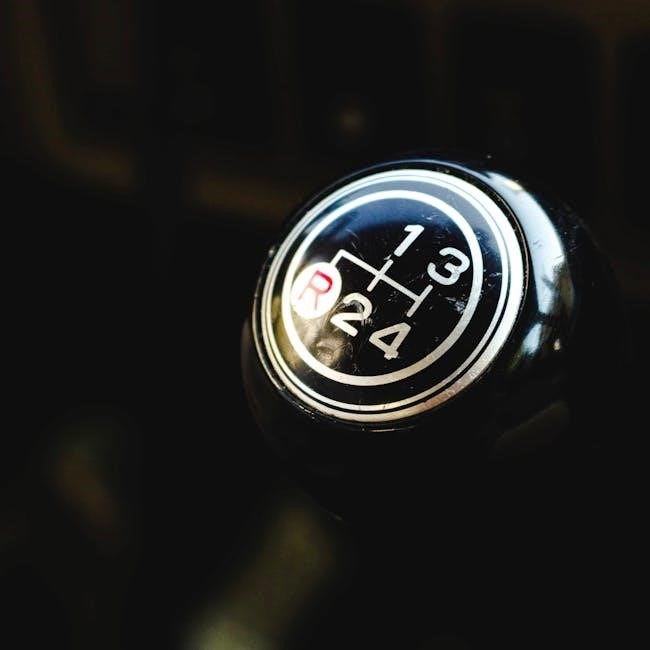
Adjusting the Shifter
Precise shifter adjustment is essential for a smooth and accurate gear selection after a 240sx manual transmission swap. Begin by ensuring all shifter linkage components are securely fastened. Check for any binding or excessive play in the linkage. Most 240sx shifters utilize adjustable linkage, allowing for fine-tuning of the shift position.
Adjust the linkage until the shifter throws are short and precise, and each gear engages cleanly without resistance. Incorrect adjustment can lead to difficulty finding gears or even damage to the transmission. Test the shifter through all gears, making incremental adjustments as needed. A properly adjusted shifter will significantly enhance the driving experience.
Testing and Troubleshooting
Post-swap testing is crucial to verify the 240sx’s manual transmission functions correctly. Start with a thorough check of all fluid levels – transmission and clutch master cylinder. Begin with low-speed test drives, carefully engaging each gear to confirm smooth operation. Listen for any unusual noises emanating from the transmission or drivetrain.
Common issues include difficulty shifting, clutch slippage, or unusual vibrations. If encountering problems, re-check all connections, linkage adjustments, and fluid levels. Consult online forums and communities for specific troubleshooting advice related to 240sx swaps. A systematic approach to testing and addressing issues will ensure a reliable and enjoyable driving experience.
Potential Issues and Solutions
Common challenges include transmission tunnel modifications for larger transmissions like the T56, ECU reprogramming, and compatibility issues between S13 and S14 models.
Transmission Tunnel Modification
A significant hurdle in the 240sx manual transmission swap often involves the transmission tunnel. The space available within the tunnel is frequently insufficient to accommodate the larger dimensions of a manual transmission, particularly when upgrading to a robust unit like the T56.
Addressing this typically requires careful and precise modification of the tunnel itself. This usually entails hammering and reshaping the metal to create adequate clearance. It’s crucial to avoid damaging structural components during this process. Some installers opt for fabricating and welding in additional metal to reinforce the altered area, ensuring long-term durability and safety.
Proper planning and assessment of the transmission’s size relative to the existing tunnel are essential before commencing any modifications.
Compatibility Issues with S13/S14 Models
When performing a 240sx manual transmission swap, careful attention to S13 and S14 model-year compatibility is vital. S13 transmissions can be used in a 1995 S14, but this isn’t universally true for later S14 models. Specifically, 1996-1998 S14s present challenges.
Direct fitment of an S13 transmission into a 1996-1998 S14 is generally not possible without modifications. One solution involves utilizing a 1995-1996 ECU, or alternatively, re-pinning a 1995-1996 ECU to function correctly within a 1997-1998 S14.
Ignoring these compatibility nuances can lead to operational issues, requiring additional troubleshooting and potentially costly corrections.

ECU Programming Considerations
Successfully completing a 240sx manual transmission swap often necessitates ECU adjustments, particularly for 1995-1998 models. Simply swapping the ECU isn’t always sufficient; the year of the replacement ECU is critical for proper operation. A 1996 model requires a 1996 ECU, while 1997-1998 models need a matching 1997-1998 unit.
Alternatively, instead of sourcing a compatible ECU, a 1995-1996 ECU can be re-pinned to function within a 1997-1998 vehicle. This re-pinning process involves modifying the wiring harness to ensure correct sensor communication and engine management.
Proper ECU configuration is essential for optimal performance and to avoid potential driveability issues post-swap.
Resources and Further Information
Numerous online forums, like NicoClub, and YouTube tutorials provide valuable guidance for your 240sx manual swap. These resources offer community support and detailed instructions.
Online Forums and Communities
Engaging with online communities dedicated to the 240sx is invaluable during a manual transmission swap. Platforms like NicoClub host extensive archives, including detailed write-ups and troubleshooting guides specifically addressing this conversion. These forums allow you to connect with experienced enthusiasts who have successfully completed similar projects.
Nissan Forums are another excellent resource, offering a space to ask questions, share experiences, and receive advice from fellow 240sx owners. Active discussions often cover ECU repinning for 1997-1998 models and compatibility concerns between S13 and S14 chassis. Utilizing these communities can significantly streamline your swap process and prevent costly mistakes.
Video Tutorials and Guides
Visual learners will benefit greatly from the numerous video tutorials available documenting the 240sx manual transmission swap. YouTube channels, like the one featuring “ninjonaah,” provide step-by-step guides, showcasing the installation process from start to finish. These videos offer a practical demonstration of tasks like removing the automatic transmission and mounting the new manual unit.
These resources visually clarify complex procedures, such as disconnecting wiring, installing the clutch and flywheel, and connecting the shifter linkage. Supplementing written guides with video content ensures a comprehensive understanding of each step, minimizing errors and boosting confidence throughout the conversion.