
Arban’s Complete Conservatory Method for Trumpet: A Comprehensive Guide

Arban’s remains the cornerstone of trumpet pedagogy, offering a systematic approach to technique and musicianship.
The new authentic edition, curated by Hooten and Marotta, includes downloadable accompaniment and performance tracks.
What is Arban’s Method?
Arban’s Complete Conservatory Method for Trumpet, often simply referred to as “Arban’s,” is a comprehensive daily routine for trumpet players of all levels. Originally published in 1864 by Jean-Baptiste Arban, a renowned French trumpet virtuoso and pedagogue, it has become the gold standard for trumpet instruction worldwide.
The method isn’t a collection of etudes or pieces to play through, but rather a systematic series of exercises designed to develop fundamental skills. These include embouchure control, breath support, articulation, range extension, and technical facility. It progresses logically, starting with the very basics and gradually increasing in difficulty.
Modern editions, like the one by Thomas Hooten and Jennifer Marotta, often include valuable additions such as accompaniment tracks, enhancing the learning experience. Arban’s isn’t just about hitting the right notes; it’s about building a solid foundation for a lifetime of musical expression on the trumpet. It’s a daily regimen, not a quick fix.
Historical Context of the Arban’s Method
Arban’s Complete Conservatory Method for Trumpet emerged in 1864, a period of significant development in brass instrument design and performance practice. Jean-Baptiste Arban, its author, was a principal trumpet player at the Paris Opera, a position demanding exceptional technical skill and musicality. He sought to codify his approach to teaching, creating a method that would elevate trumpet playing to new heights.
Prior to Arban’s method, trumpet pedagogy was often inconsistent and lacked a standardized approach. His work represented a revolutionary step forward, providing a structured and progressive system for developing fundamental skills. The original publication reflected the musical aesthetics of the 19th century, emphasizing lyrical playing and ornamentation.

Over the decades, Arban’s has undergone revisions and adaptations, with modern editions like those by Hooten and Marotta incorporating contemporary pedagogical insights and resources, such as downloadable accompaniment tracks. Despite these updates, the core principles of Arban’s method remain remarkably relevant today, demonstrating its enduring legacy.

Authors: Thomas Hooten & Jennifer Marotta ─ Modern Editions
Thomas Hooten and Jennifer Marotta are prominent figures in contemporary trumpet education, recognized for their dedication to preserving and enhancing Arban’s Complete Conservatory Method. Their collaborative work focuses on providing musicians with the most accurate and musically insightful editions available.
Recognizing the need for updated resources, Hooten and Marotta meticulously reviewed the original Arban’s, correcting errors and clarifying ambiguities. Crucially, they’ve integrated modern technology, offering accompanying performance and play-along tracks accessible via download. This addition significantly enhances the learning experience, allowing students to develop timing, intonation, and stylistic awareness.
Their editions aren’t merely reproductions; they represent a thoughtful reimagining of Arban’s for the 21st-century trumpeter. They aim to bridge the gap between historical practice and modern pedagogical approaches, ensuring the method remains a vital tool for musicians of all levels. The availability of a downloadable PDF version further expands accessibility.
The Core Components of the Arban’s Method
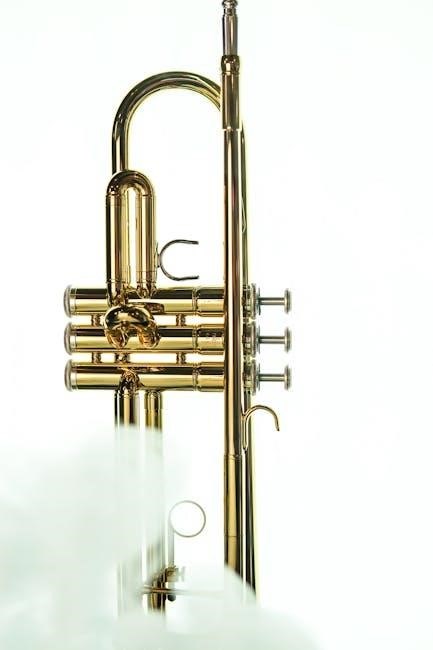
Arban’s Complete Conservatory Method for Trumpet is structured around a progressive series of exercises designed to build fundamental skills. The method systematically develops embouchure control, breath support, articulation, and range. It’s not simply a collection of etudes, but a carefully sequenced curriculum.
Central to the method are the Characteristic Studies, showcasing diverse musical styles and demanding technical proficiency. These are complemented by Elementary Studies, ideal for beginners, and increasingly challenging Technical Exercises & Scales. The inclusion of Duets & Trios fosters ensemble playing and listening skills.
Furthermore, 17 Characteristic Pieces provide opportunities to apply learned techniques in a musical context. Modern editions, often available as a downloadable PDF, now include accompaniment tracks, enhancing practice and performance. The method’s enduring strength lies in its comprehensive approach, covering all aspects of trumpet playing.
Part 1: Characteristic Studies
Part 1 of Arban’s Method, the Characteristic Studies, represents the heart of the book, offering a diverse collection of musical excerpts. These aren’t merely technical exercises; they’re miniature compositions designed to develop musicality alongside technical skill. They span various styles – lyrical melodies, brilliant flourishes, and challenging passages – demanding expressive playing.
Each study focuses on specific technical challenges, such as legato phrasing, staccato articulation, or rapid tonguing. They progressively increase in difficulty, building upon previously learned concepts. Many studies require a wide range and precise intonation. Modern PDF versions often include suggested fingerings and performance notes.
These studies are invaluable for developing a well-rounded trumpet player, fostering both technical mastery and artistic interpretation. They prepare students for a wide range of repertoire and performance situations, solidifying the foundation built in earlier sections of the method.
Part 2: Elementary Studies
Part 2, the Elementary Studies, forms the foundational building block for aspiring trumpet players utilizing Arban’s. These studies are meticulously crafted to introduce fundamental techniques in a gradual and accessible manner. They focus on establishing a solid embouchure, consistent airflow, and accurate pitch production.
The exercises begin with simple intervals and scales, progressively expanding the range and complexity. Emphasis is placed on developing a clear tone and consistent articulation. These studies are ideal for beginners, providing a structured path to develop essential skills. PDF versions often highlight key concepts for easier understanding.
Mastering these elementary studies is crucial before progressing to more challenging material. They instill good habits and prevent the development of technical flaws. Consistent practice of these studies builds a strong technical base, enabling players to tackle more advanced repertoire with confidence.
Part 3: Technical Exercises & Scales
Part 3 of Arban’s dives into intensive technical exercises and scales, building upon the foundation laid in the earlier sections. This section is designed to develop dexterity, endurance, and precision in all registers of the trumpet. Players will encounter a wide variety of articulation patterns, slurring exercises, and interval studies.
Scales are presented in numerous keys and variations, promoting a thorough understanding of harmonic relationships. The exercises progressively increase in difficulty, challenging players to maintain control and accuracy at faster tempos. Many trumpet players utilize PDF versions for convenient practice and annotation.

Consistent work through these exercises is vital for developing a flexible and responsive embouchure. They also enhance the player’s ability to navigate complex passages and execute demanding technical passages with ease. This section truly separates casual players from serious students.
Part 4: Duets & Trios
Part 4 of Arban’s introduces duets and trios, shifting the focus from individual technique to ensemble playing. This section is crucial for developing musicianship skills such as listening, balance, and intonation. The duets and trios range in difficulty, offering challenges for players of all levels.
These pieces often feature contrapuntal lines and harmonic interplay, requiring players to be attentive to their parts and to the overall musical texture. Practicing with a partner or in a small group enhances rhythmic precision and fosters a sense of musical collaboration. Many trumpet players now access these through convenient Arban’s book PDF versions.
This section also provides valuable experience in stylistic interpretation and phrasing. Successfully navigating these ensembles builds confidence and prepares players for more complex chamber and orchestral settings. It’s a fun and rewarding way to apply the technical skills learned previously.
Part 5: 17 Characteristic Pieces
Part 5 of Arban’s presents 17 characteristic pieces, serving as a culmination of the technical and musical skills developed throughout the method. These pieces are not merely exercises; they are fully realized musical compositions, showcasing a variety of styles and expressive possibilities. They range from lyrical melodies to brilliant virtuoso displays.
These pieces demand a high level of control, articulation, and musicality. Players are challenged to apply their technique in a musical context, shaping phrases and conveying emotion. Many trumpet students now utilize readily available Arban’s book PDF formats to access this section.
The characteristic pieces provide an excellent opportunity to refine performance skills and develop a personal musical voice. Mastering these pieces demonstrates a comprehensive understanding of trumpet playing and a commitment to artistic expression. They are a true test of a player’s abilities.
The Importance of the Accompaniment Tracks
Accompaniment tracks have revolutionized the way students engage with Arban’s Method. Previously reliant on a teacher or self-accompaniment, players can now practice with realistic backing, fostering a more musical and engaging experience. The new authentic edition by Hooten and Marotta specifically addresses this need, offering high-quality downloadable tracks.
These tracks are invaluable for developing rhythmic accuracy, intonation, and stylistic awareness. Practicing with accompaniment simulates a performance setting, building confidence and musicality. Many seeking an Arban’s book PDF also actively search for corresponding accompaniment resources.
The tracks aren’t just for practice; they facilitate self-assessment and performance preparation. Students can record themselves playing along and critically evaluate their performance. This feature elevates the learning process, making Arban’s more accessible and effective for modern trumpet players.
Finding Arban’s Book in PDF Format
Locating an Arban’s book PDF is a common pursuit for trumpet players seeking convenient access to this essential resource. Numerous websites offer digital versions, ranging from scans of older editions to officially licensed PDFs. However, caution is advised due to copyright concerns and varying quality.
A straightforward search using keywords like “Arban’s Complete Conservatory Method PDF” will yield many results. Music retailers often sell legitimate PDF copies, ensuring accurate notation and a legal download. Be wary of free downloads from unofficial sources, as these may contain errors or malware.
The newer editions, curated by Thomas Hooten and Jennifer Marotta, are frequently available as PDFs directly from their website or through authorized distributors. These editions often include accompanying audio files, enhancing the learning experience. Always prioritize legal and reliable sources when seeking an Arban’s book PDF.
Legality and Sources for PDF Downloads
The legality of downloading an Arban’s book PDF hinges on the source. Downloading from unauthorized websites constitutes copyright infringement, as Arban’s remains protected intellectual property. Purchasing a PDF from reputable music retailers or the publisher’s official website ensures a legal and ethical acquisition.
Reliable sources include websites specializing in sheet music PDFs, often partnering directly with publishers. Look for watermarks or digital rights management (DRM) as indicators of a legitimate purchase. Beware of “free” downloads, which are frequently illegal copies and may expose your device to security risks.
The Hooten and Marotta editions, with their accompanying performance tracks, are best obtained through their official channels to guarantee authenticity and support the creators. Prioritizing legal downloads safeguards the future of music education resources like Arban’s.
Free vs. Paid PDF Versions – What’s the Difference?
The disparity between free and paid Arban’s book PDF versions is significant. Free PDFs are often low-resolution scans, riddled with errors, missing pages, or lacking crucial markings. They frequently originate from illegal sources, posing copyright concerns and potential malware risks.
Conversely, paid versions, particularly those from authorized retailers like the publisher or reputable sheet music websites, offer high-quality, professionally prepared PDFs. These editions include accurate notation, clear fingerings, and often feature bonus materials like accompaniment tracks – essential for modern practice.
The Hooten and Marotta editions, available for purchase, provide an “Authentic Edition” with performance downloads, unavailable in free versions. Investing in a paid PDF ensures a reliable, complete, and legally obtained resource, maximizing your learning experience with Arban’s method.
Using Arban’s Method for Self-Study
Successfully utilizing an Arban’s book PDF for self-study demands discipline and a structured approach. Begin with Part 1, the Characteristic Studies, focusing on tone quality and articulation. Utilize a metronome religiously, gradually increasing tempo as proficiency grows.
The included accompaniment tracks (available with newer editions like those by Hooten and Marotta) are invaluable for developing rhythmic accuracy and musicality. Record yourself playing and critically evaluate your performance, comparing it to professional recordings.
Don’t rush through the exercises; prioritize accuracy over speed. Supplement your practice with online resources, tutorials, and recordings of trumpet players. A high-quality Arban’s PDF, combined with dedicated practice, provides a robust foundation for independent trumpet development.
Integrating Arban’s Method into Lessons
A digital Arban’s book PDF streamlines lesson integration, allowing teachers to easily share exercises and track student progress. Utilize the Characteristic Studies to address specific technical weaknesses, tailoring selections to individual needs.
The newer editions, featuring accompaniment tracks from Hooten and Marotta, enhance lesson engagement and provide immediate feedback on rhythmic precision and musicality. Encourage students to practice with these tracks between lessons;
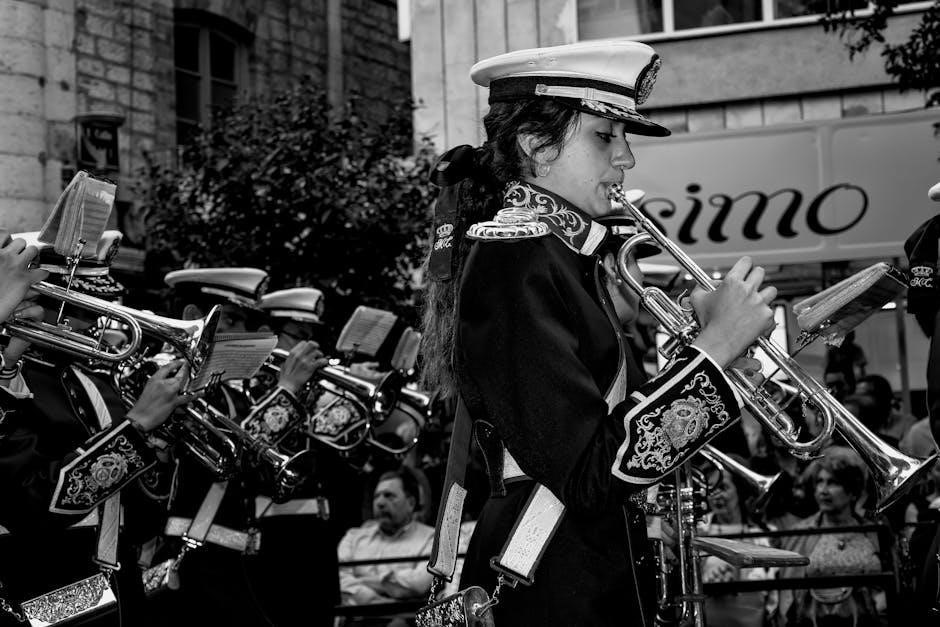
Supplement Arban’s with real-world repertoire, connecting technical exercises to musical application. A well-structured lesson plan leverages the systematic nature of the method while fostering creativity and musical expression. The PDF format facilitates annotation and personalized instruction.
Common Challenges and How to Overcome Them
Students often find the initial exercises in Arban’s, even in a PDF version, demanding due to the focus on embouchure control and breath support. Encourage slow, deliberate practice with a metronome, prioritizing accuracy over speed.

The sheer volume of material can be overwhelming. Break down practice sessions into manageable segments, focusing on a few exercises per session. Utilizing the accompanying tracks (Hooten & Marotta editions) helps maintain motivation and provides a performance context.
Finger dexterity can be a hurdle. Supplement Arban’s with separate finger exercises. Remind students that consistent, focused practice is key. A digital PDF allows for highlighting challenging passages for targeted repetition, fostering improvement over time.

Arban’s Method and Modern Trumpet Playing

Despite its 19th-century origins, Arban’s remains remarkably relevant to modern trumpet playing. While contemporary styles demand versatility, a solid technical foundation – precisely what Arban’s provides – is crucial. Even when accessed as a PDF, the core principles endure.
Modern players benefit from Arban’s emphasis on articulation, range, and endurance. The exercises build the necessary muscle memory and control for diverse genres, from classical to jazz and beyond. The Hooten & Marotta editions, with their performance tracks, bridge the gap between historical practice and contemporary sound.
A PDF version offers portability and annotation features, allowing players to adapt exercises to their specific needs. While modern methods explore new techniques, Arban’s remains a foundational element, ensuring a comprehensive and well-rounded approach to trumpet mastery.
Alternatives and Supplementary Materials
While Arban’s is foundational, numerous resources complement and expand upon its teachings. For players utilizing a PDF version, integrating digital tools can enhance practice. Clarke Technical Studies offer focused exercises for range and flexibility, while Bordogni/Rochut Melodious Etudes develop musicality and tone.
Modern methods like James Stamp’s Warm-Ups + Studies provide alternative approaches to embouchure development and sound production. These resources don’t replace Arban’s, but rather offer diverse perspectives. Accessing Arban’s as a PDF allows easy cross-referencing with these supplementary materials.
Furthermore, exploring etudes by Concone, Charlier, and Arutunian broadens technical and musical horizons. Remember, a well-rounded practice routine incorporates varied materials, building upon the solid foundation established by Arban’s Complete Conservatory Method.
The Enduring Legacy of Arban’s Method
For over 150 years, Arban’s Complete Conservatory Method for Trumpet has remained the gold standard for trumpet players worldwide. Its comprehensive approach, even when accessed as a PDF, continues to shape generations of musicians. The method’s enduring appeal lies in its systematic progression, covering fundamental techniques, scales, and artistry.
The recent authentic edition, with contributions from Hooten and Marotta, and the inclusion of downloadable accompaniment tracks, ensures its relevance in the 21st century. Despite the emergence of new methods, Arban’s provides a crucial historical and technical foundation.
Whether studying from a physical copy or a convenient PDF version, players benefit from its structured exercises. Arban’s isn’t merely a technical manual; it’s a gateway to musical expression, solidifying its place as a timeless treasure in trumpet pedagogy.